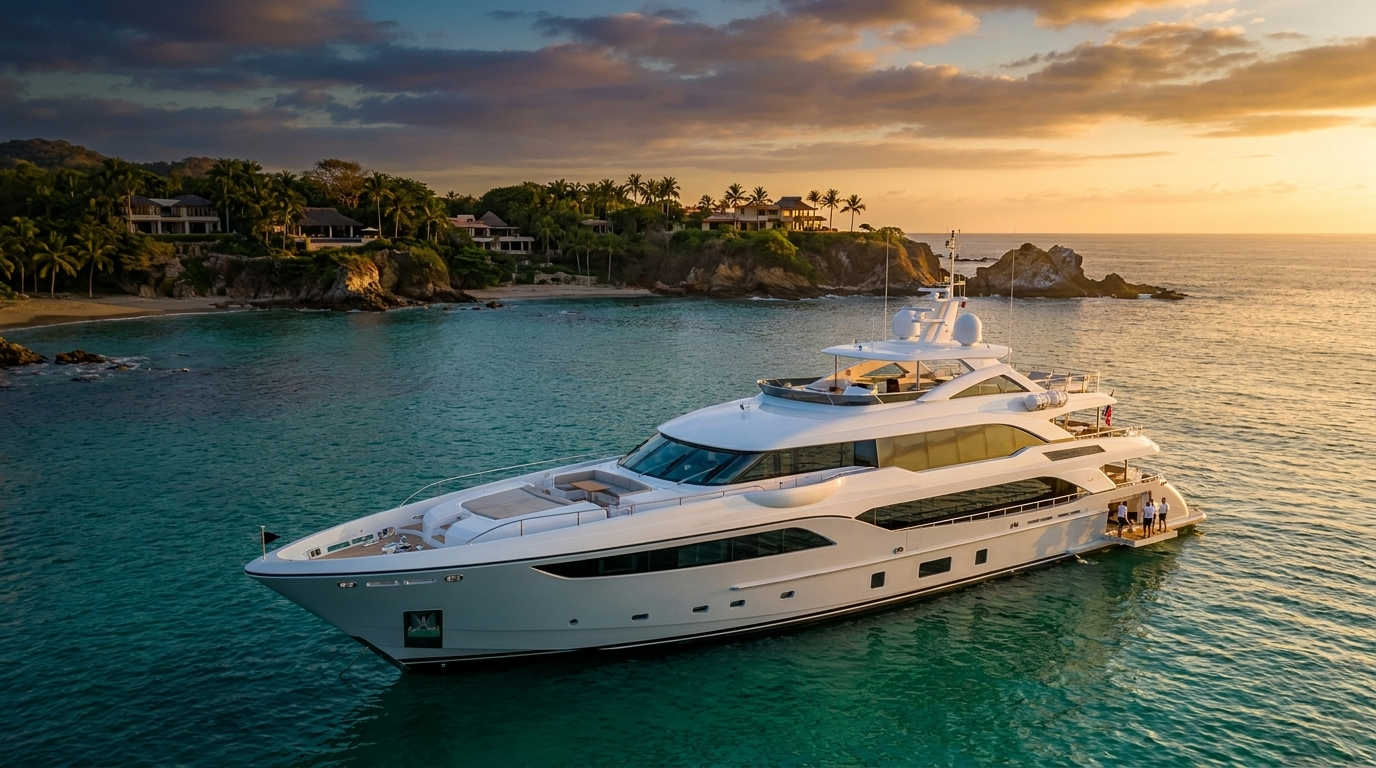
Buyers touring properties on Banderas Bay almost always ask the same question when they see water from a terrace: "so how do you actually get out on it?" The honest answer is that the vast majority of owners here — including many with the budget to keep a boat — get out on the water by booking fishing tours in Puerto Vallarta rather than by owning a vessel.
That single fact says a lot about how life on this bay works, and it is worth understanding before you buy a slip you will use six times a year. This guide covers the practical side: where the boats leave from, how the marinas relate to the neighborhoods, what the fishing calendar looks like across a year of ownership, and how chartering compares to keeping a boat of your own.
The geography that makes this bay unusual
Banderas Bay is one of the deepest bays in North America. The seabed drops off sharply within a short run of the shoreline, which is why blue-water species sit so close to the marinas. Most fishing destinations require a long, expensive run before the first line goes in the water. Here, boats are often fishing productive ground shortly after clearing the breakwater.
For property owners this has two consequences. First, a half-day trip is genuinely worthwhile rather than mostly transit, which is why so many residents fish casually and often. Second, waterfront and marina-adjacent property carries a functional premium and not just a view premium — proximity actually saves you time on the water.
Marinas, neighborhood by neighborhood
If you are weighing where to buy, it helps to know which marina you would realistically use.
Marina Vallarta and Los Peines
The main sportfishing hub, home to the largest fleet and the deepest bench of experienced captains. Convenient for owners in Marina Vallarta, Hotel Zone, Fluvial and Versalles, and the default departure point for most visiting anglers.
Marina Riviera Nayarit, La Cruz de Huanacaxtle
The shortest run to the offshore structure at Corbeteña and El Banco, and a quieter, more residential marina culture. Natural choice for owners in La Cruz, Punta Mita, Bucerías and the north shore.
Marina Nuevo Vallarta
Sheltered, calm and close to the Nuevo Vallarta and Flamingos condo corridor. Popular for inshore trips and for owners who want easy access without a drive.
Boca de Tomatlán and the south shore
Smaller pangas rather than a formal marina, serving the south shore communities. Excellent for inshore fishing along the rock structure toward Yelapa.
Chartering versus owning: the honest math
Prospective buyers frequently underestimate what a boat costs to keep in a tropical marine environment. Before committing to a slip or a vessel purchase, consider the ongoing realities:
- Slip fees charged monthly or annually, priced by vessel length.
- Maintenance in saltwater and humidity, which is materially harder on hulls, electronics and engines than in temperate climates.
- Crew or a captain, unless you plan to run the boat yourself in unfamiliar water.
- Insurance, registration and compliance for a foreign owner, which is its own process.
- Hurricane season planning, including haul-out or relocation contingencies.
- Depreciation and the resale market, which is thin and seasonal.
Against that, a chartered trip carries no fixed cost at all. For an owner who fishes eight or ten times a year — which is more than most residents manage — chartering is almost always the rational choice, and it comes with a captain who knows where the fish were yesterday. Owning makes sense when the boat is a lifestyle in its own right: entertaining, cruising the bay, day trips to Yelapa and Las Ánimas, and fishing whenever the mood strikes.
The fishing year, for a resident
One advantage of owning here rather than visiting is that you get all twelve months, and each part of the year fishes differently.
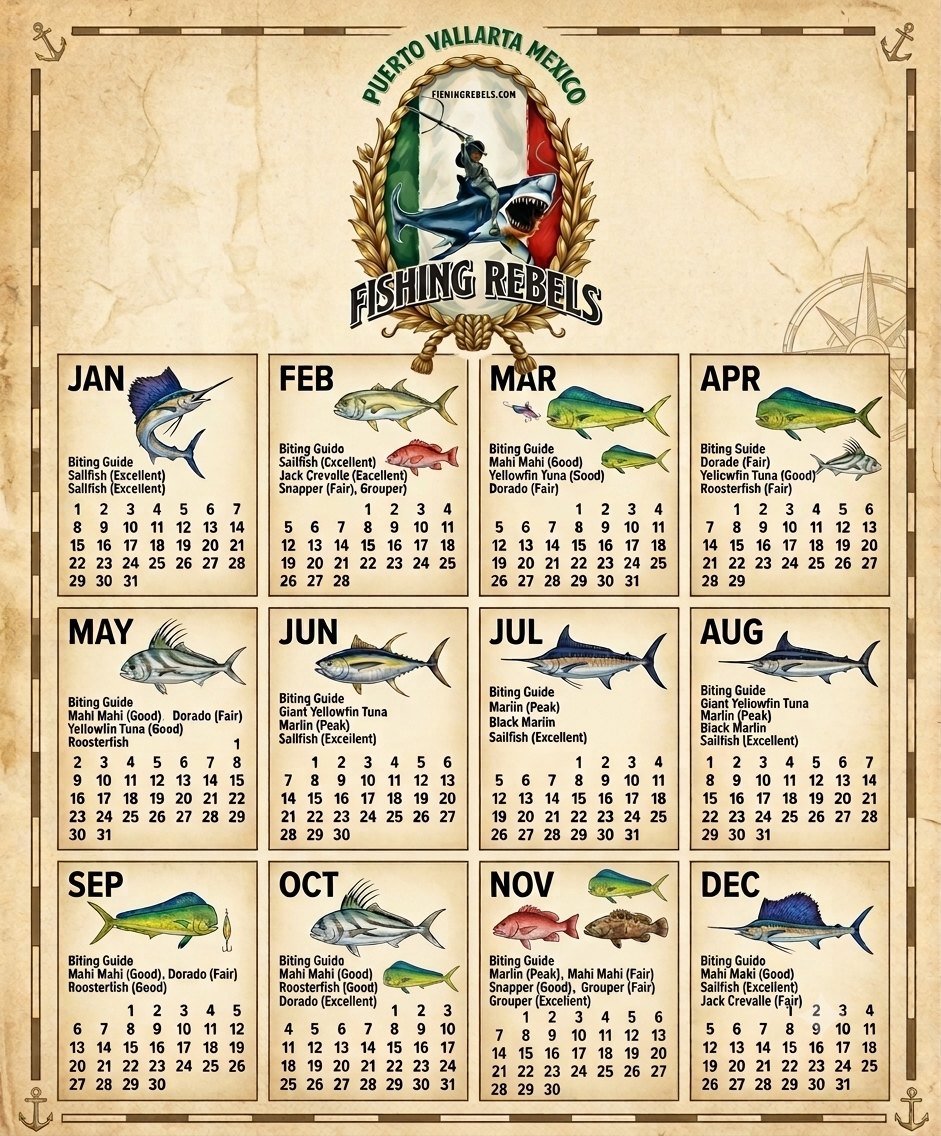
- November to April: the dry season. Calm mornings, comfortable temperatures, sailfish and striped marlin, dorado and roosterfish. It coincides with high season, so the good boats book out well in advance.
- May to October: warm water and big offshore game — blue and black marlin, large yellowfin tuna, dorado around every patch of floating structure. Afternoon rain is common, mornings are often glassy, and the marinas are far quieter.
- The shoulder weeks at each turn produce mixed bags and are, for many residents, the best fishing of the year.
If you are buying with rental income in mind, this calendar matters commercially too: fishing is one of the activities that draws repeat guests back in the green season, when occupancy is hardest to fill.
What separates a good operator from a bad one
The gap between charter operators is enormous and completely invisible from a website photograph. Whether you are booking for yourself or recommending a boat to guests, these are the questions that matter:
- What is included? Licences, bait, tackle, ice, water, food and fuel surcharges vary widely between boats.
- Are Mexican sportfishing licences arranged for everyone aboard? They are required. Reputable operators handle it; confirm rather than assume.
- Private charter or shared boat? A completely different experience for the same nominal price.
- What is the weather policy? Serious operators state their reschedule or refund terms before taking a deposit.
- Catch and release or keep? Billfish are typically released; edible species are usually filleted for you at the dock.
- How do they communicate? An operator who answers questions clearly before you pay will answer them at 6 a.m. too.
The outfit we point owners and guests toward is Fishing Rebels, which runs both inshore pangas and larger offshore boats out of Puerto Vallarta and is unusually candid about what a given trip will and will not produce. If you want to compare trip lengths before committing, you can book a fishing tour in Puerto Vallarta directly and tell them the size of your group — that detail drives almost every other decision about the right boat.
Fishing as an amenity for rental owners
If your property is on a rental program, an established relationship with a charter operator is a quiet competitive advantage. Guests searching for something to do beyond the beach frequently list a fishing morning as the highlight of their stay, and a host who can arrange it credibly earns reviews that generic listings do not. It is one of the easiest ways to differentiate a unit in a market where amenities have largely converged.
Practical version: keep a vetted operator's contact in your welcome book, note the nearest marina and drive time, and mention in your listing that fishing tours in Puerto Vallarta can be arranged for guests. It costs nothing and it converts.
Frequently asked questions
Do I need to own a boat to fish regularly in Puerto Vallarta?
No, and most residents do not. Given slip fees, tropical-climate maintenance, crew and insurance, chartering is usually the rational choice for anyone fishing fewer than a couple of dozen times a year. Owning makes sense when the boat is a broader lifestyle purchase rather than a fishing tool.
Which marina is closest to my neighborhood?
Marina Vallarta and Los Peines serve the Marina, Hotel Zone, Fluvial and Versalles areas; Marina Nuevo Vallarta serves the Nuevo Vallarta and Flamingos corridor; Marina Riviera Nayarit in La Cruz serves the north shore and offers the shortest run to the offshore banks; the south shore is served by pangas from Boca de Tomatlán.
When is the best month to fish here?
There is no bad month. November through April brings calm seas, sailfish and striped marlin; May through October brings warmer water, blue and black marlin, large yellowfin tuna and dorado. Shoulder weeks often produce the most varied fishing with the fewest crowds.
Are fishing licences required in Mexico?
Yes, everyone aboard a sportfishing vessel in Mexican waters needs one. Established charter operators arrange licences as part of the trip, but you should confirm this explicitly when booking.
Can guests in my rental property book fishing trips easily?
Yes, and it is worth setting up in advance. Keeping a vetted operator in your welcome materials, along with the nearest marina and realistic drive time, turns a common guest question into a smooth experience and better reviews.
Does waterfront or marina-adjacent property command a premium?
It does, and on this bay part of that premium is functional rather than purely aesthetic: deep water sits unusually close to shore, so proximity to a marina genuinely translates into more time on the water and less time driving before dawn.