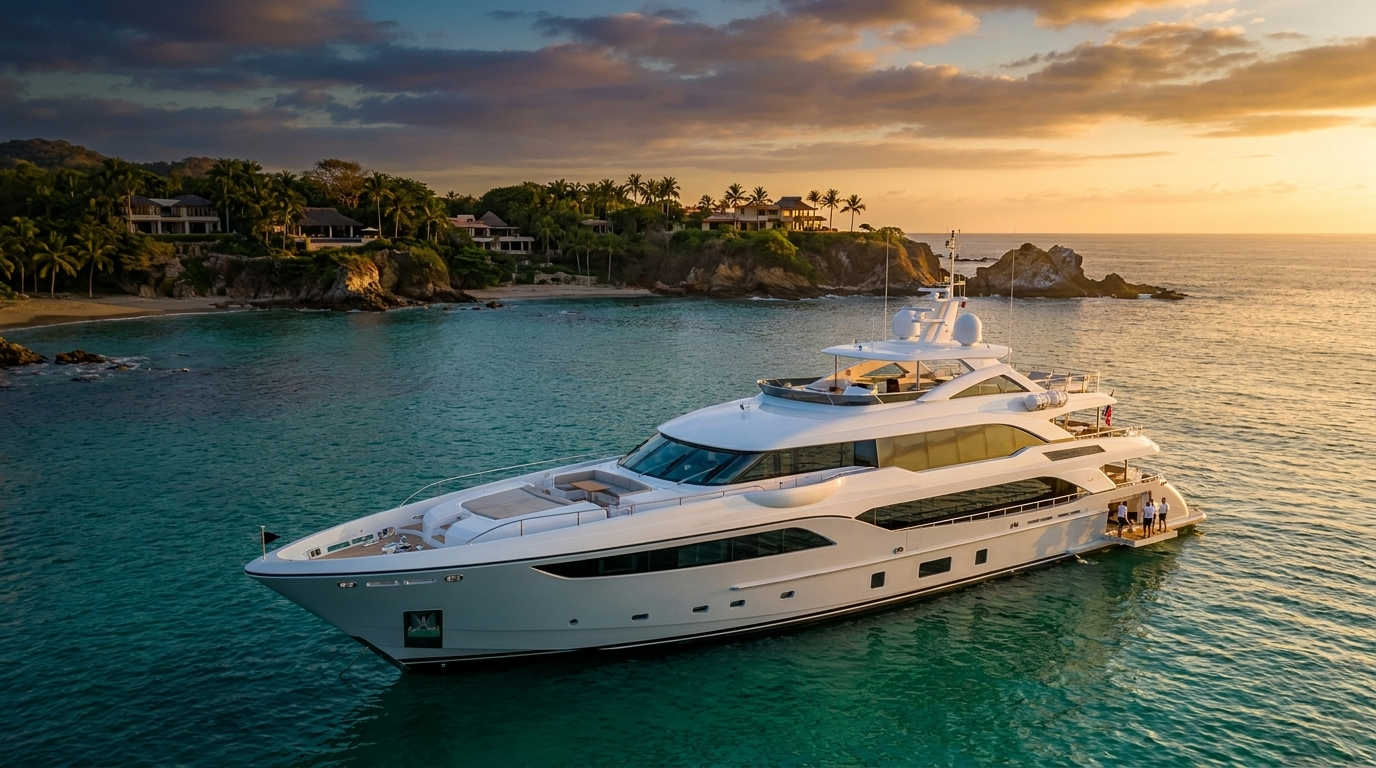
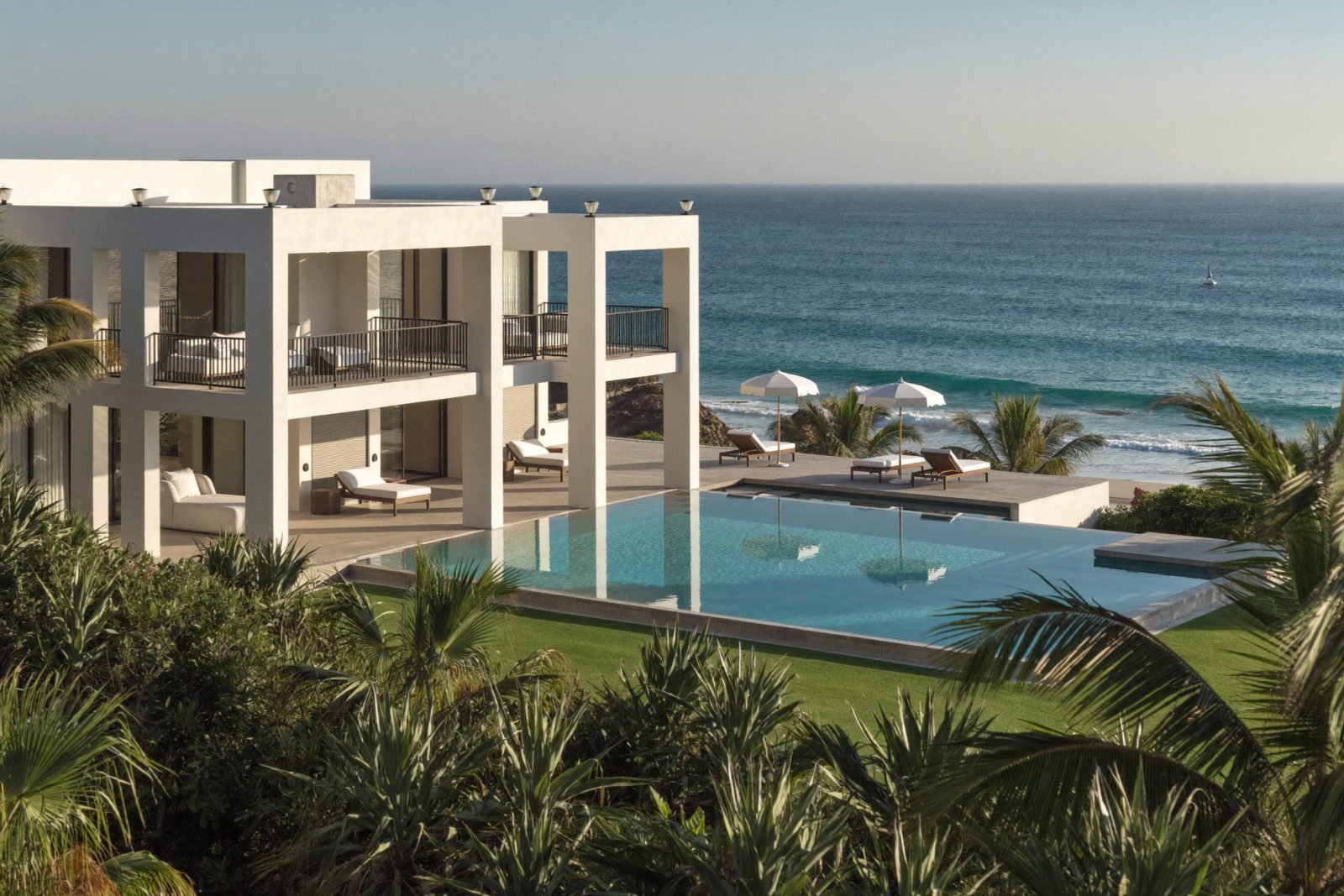
Almost every buyer who tours a condo in Marina Vallarta, Nuevo Vallarta or La Cruz de Huanacaxtle has the same moment. You step onto the balcony, look down at the masts and flybridges lined up along the docks, and a thought arrives uninvited: if we buy here, we should get a boat. It is a lovely thought. It is also one of the most expensive impulses in coastal real estate, and it deserves the same cold-eyed analysis you would give the purchase of the condo itself.
This article runs the numbers the way an investor would. We look at what owning a boat on Banderas Bay really involves, what the alternative — boat rental by owner — costs today based on real published listings, and where the break-even point sits for different kinds of buyers. The goal is not to talk anyone out of a boat. It is to make sure that if you buy one, you buy it for the right reasons, and if you don't, you still get the waterfront lifestyle you paid a marina premium for.
Why the marina premium exists in the first place
Marina-front property in Vallarta is priced on lifestyle as much as on square meters. Buyers pay for the view of the boats, the walkable boardwalk, the restaurants and — implicitly — the idea of easy access to the water. Our Marina Vallarta neighborhood guide covers the residential side in detail, but the short version is that proximity to the docks is a real, durable driver of resale value and rental demand.
The trap is assuming that capturing that value requires you to own a vessel. It does not. What the market actually rewards is access: the ability for you, your family and your rental guests to be on a private boat within an hour of deciding to go. In 2026 there are two ways to buy that access — ownership or chartering — and the second has changed dramatically in the last few years.
The three marina districts buyers compare
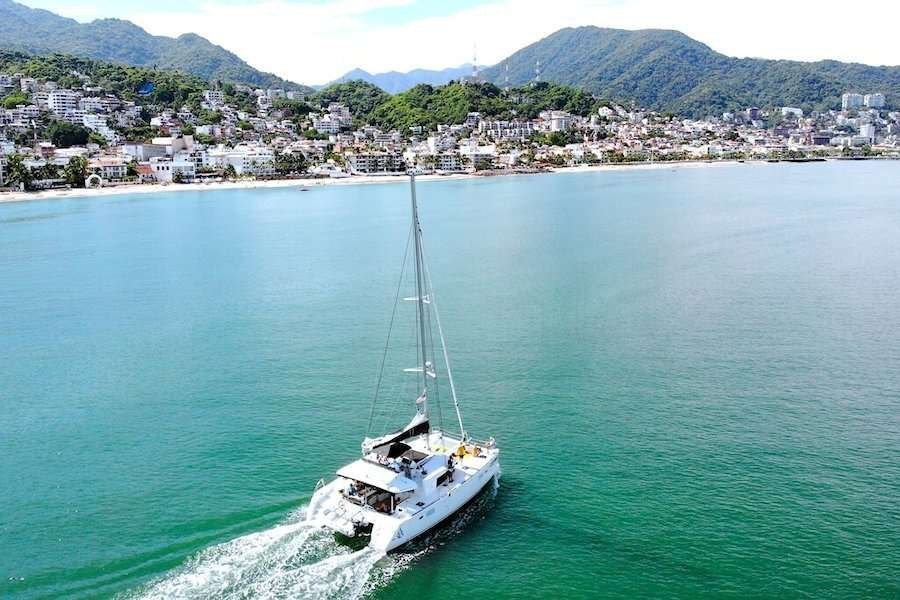
Marina Vallarta is the established hub, minutes from the airport, with the deepest bench of charter boats on the bay. Nuevo Vallarta, across the river in Nayarit, mixes resort towers with canal-front homes and its own marina. La Cruz de Huanacaxtle, further north, has the newest large marina on the bay and a more village feel, plus quicker runs to the Marietas Islands and Punta Mita. Each one changes the boating equation slightly, and we come back to that below.
What owning a boat on Banderas Bay really costs
The purchase price is the number everyone fixates on, and it is the least interesting one. Seasoned owners will tell you that the true cost of a boat is what it takes to keep it ready, legal and insured, year after year, whether or not you use it. The commonly cited rule of thumb in the yachting world is that annual running costs land somewhere around 10% of the vessel's value — sometimes less for a simple, well-kept boat, often more for an older or larger one. Treat that as a starting estimate, not a quote, and pressure-test it with a local surveyor before you buy.
The fixed costs that never take a day off
- Slip or mooring. Marina berths are charged by length, and the bigger and newer the marina, the higher the rate. You pay it every month, used or not.
- Insurance. Hull and liability coverage in a hurricane-exposed region is not cheap, and policies often carry named-storm conditions you must plan around.
- Crew or captain. Most foreign owners either hire a captain by the day or keep someone on retainer. A boat over about 40 feet usually needs a professional to run it safely in local waters.
- Maintenance. Salt, sun and warm water are relentless. Bottom cleaning, engine service, generator hours, canvas, electronics and air-conditioning all age faster on a tropical coast.
- Paperwork. Registration, Mexican navigation permits and port authority requirements add administrative cost and time, especially for foreign-flagged vessels.
The variable costs per outing
Fuel is the big one. A twin-engine motor yacht burns through it quickly on a run to the Marietas or to Yelapa and back. Add ice, provisions, crew tips and the occasional mechanical surprise, and every day on the water carries its own bill on top of the fixed costs.
The cost nobody budgets: your time
If you live in Vallarta only part of the year, someone has to look after the boat while you are away — run the engines, check the bilge, deal with the yard, prepare it before you arrive and secure it ahead of storm season. Absentee owners either pay for a management service or spend a surprising share of their holidays on boat chores. For many second-home buyers, this is the factor that ends the ownership dream, not the money.
Depreciation and resale
Unlike the condo, a boat is a depreciating asset. Some well-known brands hold value better than others, but you should model the vessel as a cost, not an investment. That alone changes the comparison: the marina condo may appreciate, while the boat parked beneath it almost certainly will not.
What chartering by owner costs in 2026 (real listings, not guesses)
The alternative is to rent the boat only on the days you want it. The model that has reshaped this side of the market is the owner-direct marketplace: instead of booking through a tour desk or a broker, you deal with the person who owns and operates the boat. On the Puerto Vallarta yacht charters page of BYRBO, 77 yachts and boats serving the bay are published directly by their owners, each with a starting price on the listing. Here is what those published starting rates looked like on October 13, 2026:
| Boat (as listed) | Size / type | Guests | Marina | From |
|---|---|---|---|---|
| Luhrs 25 | 25 ft sportfishing | 4 | Marina Vallarta | USD 700 / 4 h |
| Gulf Stream 34 | 34 ft day boat | 10 | Nuevo Vallarta | USD 710 / day |
| Sea Ray 46 | 46 ft sport yacht | 14 | Marina Vallarta | USD 1,000 / 4 h |
| Lagoon 42 | 42 ft catamaran | 20 | Marina La Cruz | USD 1,600 / day |
| Lagoon 45 (2020) | 45 ft catamaran | 20 | Marina Vallarta | USD 1,825 / 4 h |
| Azimut 62 | 62 ft sport yacht | 20 | Marina Vallarta | USD 2,650 / 4 h |
| Fountaine Pajot 47 (2020) | 47 ft catamaran | 20 | Nuevo Vallarta | USD 3,000 / day |
| Sunseeker 58 Flybridge | 58 ft luxury yacht | 15 | La Cruz Marina | USD 3,975 / day |
| Azimut 70 Flybridge | 70 ft luxury yacht | 29 | Marina Vallarta | USD 5,294 / day |
| Montefino 84 | 84 ft super-luxury | 25 | La Cruz | USD 7,500 / day |
| Hatteras 122 | 122 ft super-luxury | 12 | Marina Vallarta | USD 12,670 / day |
Two things stand out. First, the range is enormous — from a few hundred dollars for a half-day on a small fishing boat to five figures for a superyacht day — which means you can match the boat to the occasion rather than living with one vessel that is too big for a quiet sunset and too small for a family reunion. Second, every one of those prices already folds in the captain, the insurance, the slip and the maintenance. When you rent, those become the owner's problem.
Prices on a listing are starting rates; fuel surcharges for longer routes, Marietas park fees, food and drinks can vary, so always confirm what is included with the owner before you pay. That conversation is easier when you are talking to the person who actually runs the boat, which is the core argument for owner-direct yacht rental in the first place.
The break-even math, step by step
The comparison is simple to set up and almost always surprising. You need two numbers: what ownership costs you per year (all-in, excluding the purchase price), and what a comparable charter costs you per outing.
Step 1: estimate your all-in annual ownership cost
Add slip, insurance, crew, maintenance, management while you are away, paperwork and a realistic fuel budget. Then add the opportunity cost of the capital tied up in the boat and a depreciation allowance. Many buyers who do this honestly for the first time find the number is several times what they assumed.
Step 2: price the equivalent charter
Pick the boat you would actually buy and find its closest equivalent among yacht rentals in Puerto Vallarta. If you are dreaming of a 60-foot sport yacht, the Azimut 62 at USD 2,650 for four hours is a fair benchmark. If a sailing catamaran is your style, the Lagoon 45 at USD 1,825 for four hours or the Fountaine Pajot 47 at USD 3,000 for a full day are realistic comparisons.
Step 3: divide
Divide the annual ownership cost by the per-outing charter price. The result is the number of charter days per year you would need to use before owning becomes cheaper. As an illustration only — plug in your own figures — if your all-in ownership cost came to USD 60,000 a year and your benchmark is a USD 2,650 half-day, you would need roughly 23 half-day outings every single year just to break even, before depreciation. For a family that visits for six weeks each winter, that is a boat day every other day of the stay, every year, for as long as you own the vessel.
Step 4: be honest about utilization
Industry surveys and marina managers say the same thing in different words: most private boats spend the vast majority of their lives tied to the dock. Part-time residents use them even less. When you compare real usage — not hoped-for usage — against the break-even number, chartering wins for most second-home owners by a wide margin.
When owning a boat does make sense
There are buyers for whom ownership is the right call, and it is worth being clear about who they are:
- Full-time residents who go out weekly. If you live on the bay year-round and genuinely fish or cruise most weeks, utilization can clear the break-even line.
- Experienced skippers with a small boat. A modest center-console that you run yourself has a far lower cost base than a crewed yacht, and the math shifts accordingly.
- Owners who plan to charter their own boat. Some owners offset costs by listing the vessel when they are away — which, notably, is exactly how much of the owner-direct charter fleet came to exist. If you go this route, treat it as a small business with its own permits, crew and accounting.
- People for whom the boat is the point. If tinkering with engines and polishing teak is your joy, the spreadsheet matters less. Just go in with your eyes open.
How chartering protects your real estate investment
There is a quieter argument for chartering that real estate buyers often miss: it keeps your capital where it has a chance to grow. The money that would sit in a depreciating hull can go into a better unit, a larger terrace, a renovation that lifts rental income, or simply a lower mortgage balance. In a market where the condo is the appreciating asset, letting it carry the investment weight — while you rent the boat — is the cleaner balance sheet.
It also makes your property easier to rent. Vacation guests in marina districts increasingly ask hosts for a boat recommendation, and a host who can point them toward a reliable private yacht charter in Puerto Vallarta earns better reviews without carrying any of the liability. Our guide to vacation rental revenue optimization covers how experience add-ons like this lift occupancy and nightly rates.
Matching the marina to your boating style
If you are still choosing a neighborhood, it helps to think about where you would most often board.
Marina Vallarta: the widest choice
The majority of owner-listed boats on the bay are based here, from small sportfishers to the Hatteras 122. For a buyer, that means the most flexibility: you can book a different boat for every occasion without driving anywhere. Browse the full Puerto Vallarta yacht fleet to get a sense of the range.
Nuevo Vallarta: catamarans and big-group boats
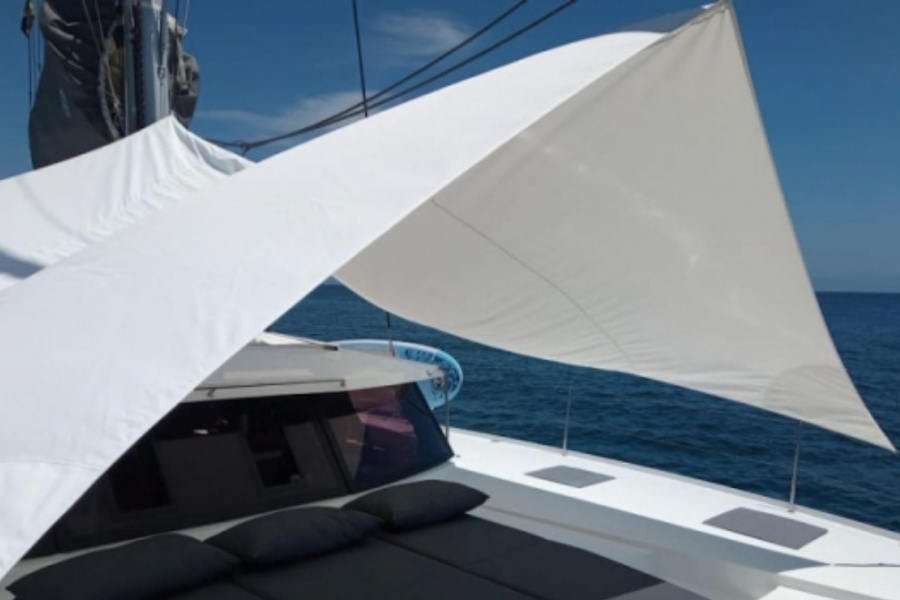
Nuevo Vallarta's marina is home to several large catamarans and party boats, including the Fountaine Pajot 47 and the Party 90 Custom Catamaran rated for up to 150 guests. If you expect to host family gatherings or corporate groups, see the catamaran charters around Puerto Vallarta.
La Cruz de Huanacaxtle: closer to the Marietas
The marina at La Cruz is newer and positioned closer to Punta Mita and the islands. It is home to boats like the Sunseeker 58 Flybridge, the Montefino 84 and the Lagoon 42 listed at USD 1,600 per day. Buyers who prioritize whale watching and island days should look at the La Cruz yacht charters and pair them with our La Cruz de Huanacaxtle guide.
How to charter like an owner, without owning
The trick that experienced marina residents use is to build a relationship with two or three owners rather than booking cold each time. A few practical habits make chartering by owner on Banderas Bay feel almost like having your own boat:
- Keep a short list. One small boat for fishing or a quick sunset, one catamaran for family days, one larger yacht for celebrations. Rebook the ones that treat you well.
- Book high season early. From December through April — whale season and peak holidays — the best boats fill weeks ahead.
- Agree the inclusions in writing. Captain, crew, fuel for the route, snorkel gear, food, drinks and park fees. A clear message thread with the owner is your contract.
- Use weekdays. Midweek dates are easier to secure and give you more room to tailor the route.
- Let the captain route the day. Wind, swell and season decide whether Yelapa, Los Arcos or the Marietas is the better choice. Owners who live on the water know.
Done this way, the experience of renting a yacht from its owner delivers most of what people imagine when they picture owning one — a familiar captain, a boat set up the way you like, a route shaped around your day — without the slip invoice arriving every month.
A worked scenario: the winter couple and the year-round family
The winter couple. A retired couple buys a two-bedroom condo overlooking the Marina Vallarta docks and spends January through March there. Their realistic plan is one sunset cruise a week, one whale-watching day a month and a big catamaran day when the grandchildren visit. That is around a dozen outings a season. Owner-listed boats in Vallarta cover all of it — a smaller sport yacht for sunsets, a catamaran like the Lagoon 45 for the family day — for a fraction of what a crewed boat would cost to keep year-round. And when they lock the condo in April, there is nothing left at the dock to worry about.
The year-round family. A family relocates full-time to La Cruz, fishes every weekend and has a parent who is a competent skipper. They buy a modest fishing boat they can run themselves, and charter a larger yacht or catamaran a few times a year for celebrations. That hybrid — own small, charter big — is often the smartest answer for genuine residents.
The bottom line for buyers
A marina-front home in Puerto Vallarta is a lifestyle purchase backed by solid fundamentals. A boat is a lifestyle purchase backed by none. For most buyers — and almost all part-time owners — the better strategy is to put capital into the property, then access the water through Puerto Vallarta Yacht Charters & Rentals booked directly with the owners. You keep the view of the masts, the sunset cruises and the island days, and you skip the depreciation, the storm prep and the monthly slip bill. If you are earlier in the process, start with our complete guide to buying property in Puerto Vallarta, then come back to the boat question once you know which marina you will call home.
Sources & references
- BYRBO — the Puerto Vallarta charter fleet, published by owners
- BYRBO — Yachts in Puerto Vallarta
- BYRBO — Catamarans in Puerto Vallarta
- BYRBO — La Cruz yacht charters
- BYRBO — Lagoon 45 (2020), Marina Vallarta
- BYRBO — Fountaine Pajot 47 (2020), Nuevo Vallarta
Fleet data and starting prices taken from the published listings on October 13, 2026; owners update rates and availability, so confirm on the listing before booking.
Browse Puerto Vallarta yachts on BYRBO →
Frequently Asked Questions
For most second-home owners, chartering is far cheaper. Owning carries fixed costs every month — slip, insurance, crew, maintenance and management — plus depreciation. Divide your all-in annual ownership cost by the price of an equivalent charter; unless you go out more often than that number every year, chartering by owner wins.
On owner-published listings in October 2026, starting prices ranged from about USD 700 for four hours on a 25 ft sportfishing boat, through USD 1,000–2,650 for four hours on 46–62 ft sport yachts, to USD 12,670 per day for a 122 ft Hatteras. Always confirm what is included with the owner.
It means booking directly with the person who owns or operates the boat instead of through a broker or tour desk. You communicate with the people who run the vessel, agree the route and inclusions with them, and avoid an intermediary markup.
Marina Vallarta has the widest choice of boats and is closest to the airport. Nuevo Vallarta is strong for large catamarans and group boats. La Cruz de Huanacaxtle is closer to Punta Mita and the Marietas Islands. Choose based on how and where you expect to use the water.
Only if you are ready to run it as a business with crew, permits, insurance and bookkeeping. Most property owners get the guest-experience benefit with none of the liability by recommending a trusted owner-direct charter instead.
Book weeks ahead for December through April, which is high season and humpback whale season. Midweek dates are easier to secure year-round and give you more flexibility on the route.